
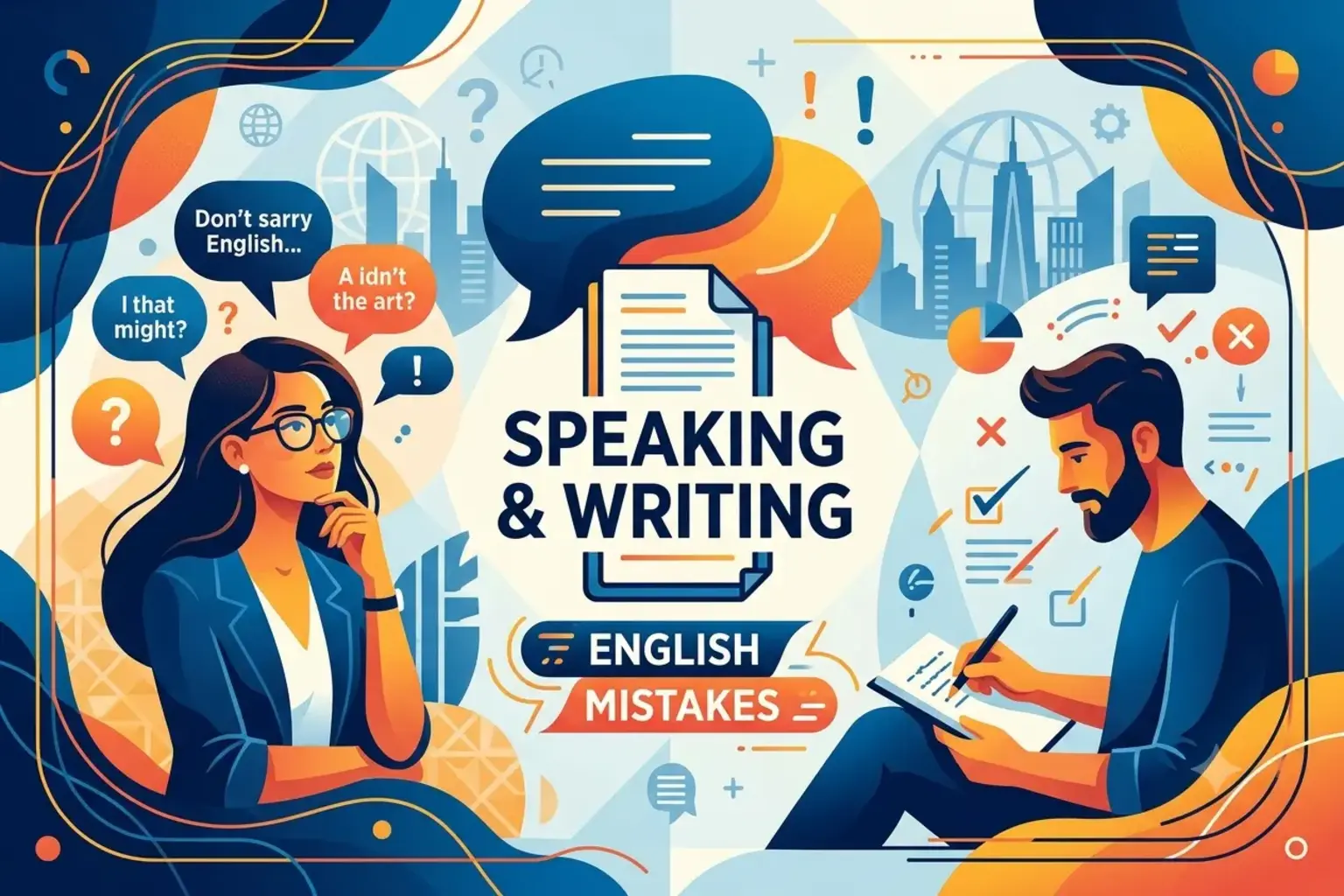
Learning English is an exciting journey, but every language learner makes mistakes along the way. In fact, making mistakes is one of the fastest ways to improve. For ESL Learners, recognizing and correcting errors is far more valuable than trying to speak or write perfectly from the beginning.
Many Common English Mistakes are repeated because learners translate directly from their native language or rely on grammar rules without understanding real-life usage. Whether you’re preparing for university, improving your business english communication, or getting ready for exams like IELTS, TOEFL, PTE, or OET, learning to identify these errors can dramatically improve your confidence.
Let’s explore the most frequent mistakes ESL learners make and, more importantly, how to fix them.
Read More: From Translation to Thinking in English: The Real Breakthrough for ESL Learners
1. Confusing Tenses
One of the most frequent common grammar mistakes in english involves verb tenses.
Incorrect:
- I have seen him yesterday.
- She go to work every day.
Correct:
- I saw him yesterday.
- She goes to work every day.
Time expressions such as yesterday, last week, and in 2024 usually require the simple past tense, while habits require the simple present.
Mastering tenses improves both english communication skills and professional writing.
2. Subject-Verb Agreement Errors
Many learners forget that the verb changes depending on the subject.
Incorrect:
- He like coffee.
- My friend work in London.
Correct:
- He likes coffee.
- My friend works in London.
Although this seems like a small detail, it immediately affects how natural your English sounds.
3. Using Articles Incorrectly
Articles (a, an, the) are among the biggest sources of english grammar mistakes.
Incorrect:
- I bought new laptop.
- Sun is shining.
Correct:
- I bought a new laptop.
- The sun is shining.
Many languages do not use articles, making them challenging for ESL learners. Regular reading is one of the best ways to develop an instinct for article usage.
4. Direct Translation from Your Native Language
Literal translation often creates awkward sentences.
Incorrect:
- I have 25 years.
- I am agree.
Correct:
- I am 25 years old.
- I agree.
English expressions often differ completely from those in other languages. Learning phrases instead of individual words helps reduce english language mistakes.
5. Misusing Prepositions
Prepositions seem simple but are responsible for countless common english errors.
Incorrect:
- Married with someone.
- Good in English.
- Interested on music.
Correct:
- Married to someone.
- Good at English.
- Interested in music.
Unfortunately, there are few shortcuts here. Exposure through reading and listening remains the best solution.
6. Speaking Too Fast Without Accuracy
Many learners believe speaking quickly means speaking fluently.
Actually, fluency comes from clarity, not speed.
Speaking slowly allows you to:
- Think about grammar
- Choose better vocabulary
- Improve pronunciation
- Reduce english speaking mistakes
As your confidence grows, your speed naturally improves.
7. Pronunciation Problems
Poor pronunciation can make even correct grammar difficult to understand.
Common pronunciation issues include:
- Silent letters
- Word stress
- Ending sounds
- Long and short vowels
Daily english pronunciation practice helps learners become easier to understand.
For example:
- Comfortable
- Vegetable
- Wednesday
- February
These words are often pronounced differently from how they are spelled.
Consistent listening and shadowing exercises significantly improve english conversation skills.
8. Using Informal English at Work
Many learners know conversational English but struggle with business english communication.
For example:
Too informal:
- Send me this.
- I want meeting.
Professional:
- Could you please send me this?
- I’d like to schedule a meeting.
Learning workplace English is essential for anyone using english for work and study.
9. Weak Vocabulary Choices
Repeating the same basic words limits communication.
Instead of always saying:
- good
- bad
- nice
- big
Try:
- excellent
- disappointing
- impressive
- enormous
Expanding vocabulary naturally leads to more advanced english speaking skills.
10. Writing Exactly Like You Speak
Conversation and writing are different skills.
Many common mistakes in english writing occur because learners write informal spoken English.
Example:
Too casual:
“I wanna tell you about my project.”
Better:
“I would like to tell you about my project.”
Academic and professional writing requires greater precision and structure.
11. Forgetting Punctuation
Punctuation changes meaning.
Compare:
- Let’s eat, Grandma.
- Let’s eat Grandma.
Even small punctuation mistakes can create confusion and increase english writing errors.
Always review:
- commas
- periods
- apostrophes
- capital letters
12. Overusing Passive Voice
Passive voice has its place, but beginners often overuse it.
Instead of:
“The report was completed by me.”
Write:
“I completed the report.”
Active voice usually sounds clearer and stronger.
13. Using Incorrect Word Forms
Many learners know vocabulary but choose the wrong form.
Incorrect:
- She is success.
- This decision was importance.
Correct:
- She is successful.
- This decision was important.
Understanding nouns, verbs, adjectives, and adverbs greatly improves writing quality.
14. Ignoring Feedback
Perhaps the biggest mistake isn’t grammatical—it’s refusing to review corrections.
Every correction teaches something valuable.
Whether you receive IELTS Writing Corrections, teacher feedback, or corrections from AI writing tools, study them carefully.
The learners who improve fastest are those who learn from every mistake.
Practical Ways to Reduce Common English Mistakes
Improvement doesn’t happen overnight, but consistent habits make a huge difference.
Try these strategies:
- Read English every day.
- Listen to native speakers regularly.
- Practice speaking aloud.
- Keep a notebook of your mistakes.
- Rewrite corrected sentences.
- Record yourself speaking.
- Ask for regular feedback.
- Complete daily grammar exercises.
- Practice writing emails and short essays.
- Use correction tools wisely instead of relying on them completely.
These habits gradually improve both english speaking practice and writing accuracy.
Preparing for English Exams
If you’re studying for international English exams, correcting mistakes becomes even more important.
For example:
- IELTS Speaking Mistakes often include memorized answers, poor pronunciation, and grammar errors.
- Following practical IELTS Speaking Tips helps candidates sound more natural.
- Effective TOEFL English Practice focuses on both speaking and academic writing.
- Useful TOEFL Speaking Tips encourage organized responses rather than perfect grammar.
- Strong PTE Speaking Tips emphasize fluency, pronunciation, and confidence.
- During OET Exam Preparation, healthcare professionals must communicate accurately and professionally.
Each exam rewards clear communication more than perfect English.
Why Structured Learning Helps
Many learners study English for years without making significant progress because they repeat the same mistakes.
A structured english fluency course provides:
- Expert feedback
- Speaking corrections
- Grammar review
- Vocabulary development
- Writing practice
- Pronunciation coaching
- Real conversations
- Personalized learning plans
Instead of guessing what’s wrong, learners receive clear guidance on how to improve.
This leads to faster progress, stronger english communication skills, and greater confidence in everyday conversations, academic settings, and professional environments.

Final Thoughts
Every learner makes mistakes. The goal isn’t to eliminate every error overnight but to recognize patterns and improve consistently.
The most successful ESL Learners don’t avoid mistakes—they learn from them. By correcting Common English Mistakes, practicing regularly, and seeking constructive feedback, you can steadily improve your speaking and writing.
Whether your goal is stronger advanced english speaking skills, better workplace communication, higher exam scores, or greater confidence in everyday conversations, consistent practice combined with structured guidance will help you achieve lasting fluency.
Frequently Asked Questions (FAQs)
1. What are the most common English mistakes ESL learners make?
The most common mistakes include incorrect verb tenses, subject-verb agreement, article usage, prepositions, pronunciation issues, and english writing mistakes caused by direct translation from a native language.
2. How can I improve my English speaking skills faster?
Practice speaking every day, listen to native speakers, record yourself, focus on english pronunciation practice, learn from corrections, and consider joining an english fluency course for structured feedback.
3. Why do I keep making the same grammar mistakes?
Repeated common grammar mistakes in english often happen because learners don’t review corrections or practice them consistently. Keeping a mistake journal and revisiting corrected sentences helps prevent recurring errors.
4. How can I improve my English writing skills?
To improve english writing skills, read regularly, write every day, review your grammar, pay attention to punctuation, expand your vocabulary, and carefully study IELTS Writing Corrections or teacher feedback.
5. Are mistakes acceptable during IELTS, TOEFL, PTE, or OET exams?
Yes. Minor mistakes are expected. Examiners focus on overall communication, fluency, organization, vocabulary, and pronunciation. Following IELTS Speaking Tips, TOEFL Speaking Tips, PTE Speaking Tips, and targeted OET Exam Preparation can help you minimize errors while communicating confidently.




Leave a Reply