
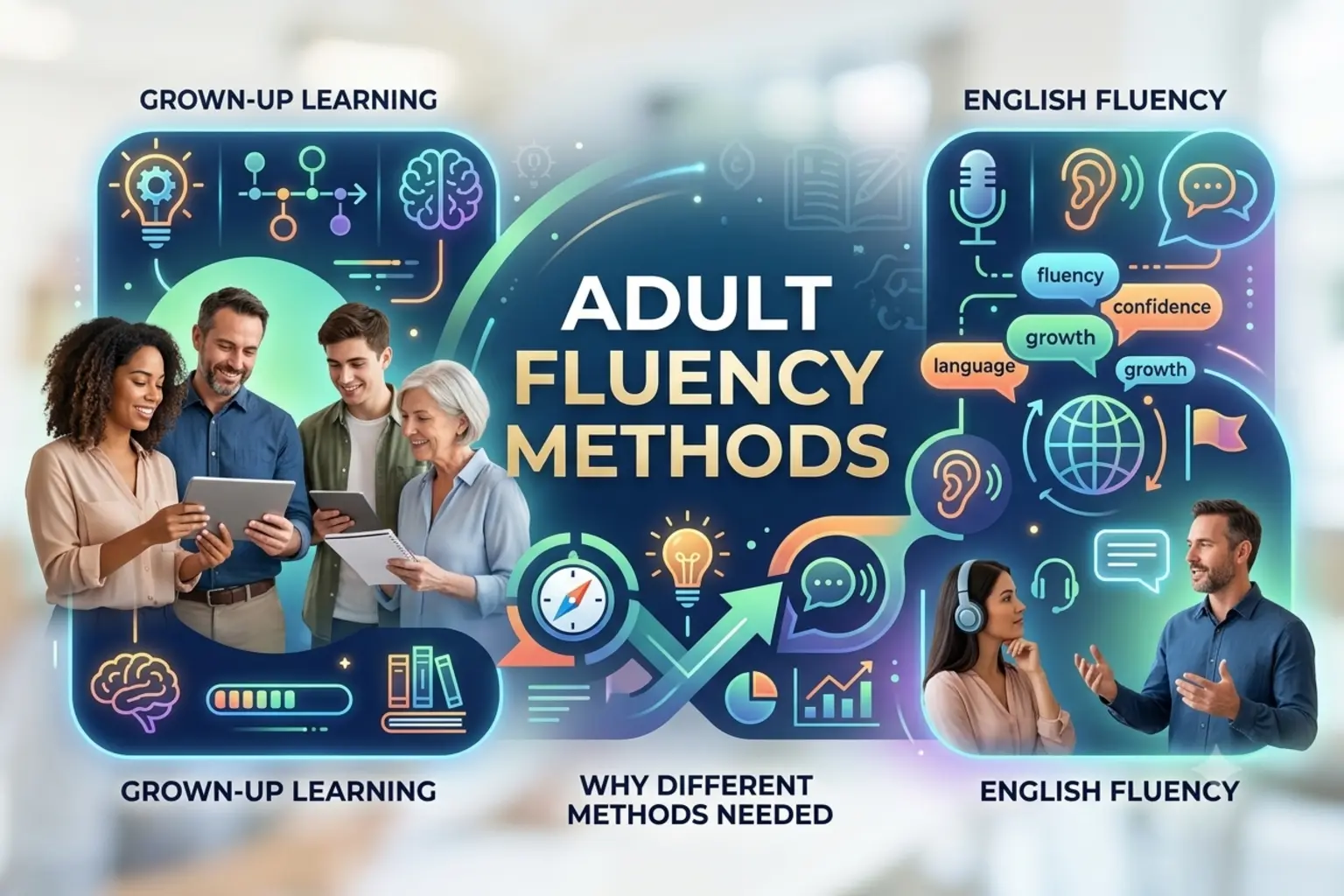
Learning English as an adult is a completely different experience from learning it as a child. Many adults begin their language journey believing they simply need to memorize grammar rules or learn more vocabulary. However, after months of study, they often realize they still hesitate during conversations, struggle to express ideas, or lose confidence when speaking.
The truth is that Adult Learning follows a different path. Adults already have established thinking patterns, busy schedules, career responsibilities, and specific goals. Because of this, achieving English Fluency requires methods that focus on practical communication rather than classroom-style memorization.
Whether you’re preparing for international education, improving your career prospects, or simply hoping to communicate more naturally, understanding how Adult English Learning Fluency develops can save you years of frustration.
Read More: Why Adult ESL Learners Struggle with Fluency Even After Years of English Study
Why Adults Learn Differently from Children
Children absorb languages through constant exposure. They listen, imitate, make mistakes without fear, and gradually become fluent without consciously studying grammar.
Adults, however, approach language with an analytical mindset. They often want to understand every grammar rule before speaking. Unfortunately, this habit can slow down progress.
Adult learners usually:
- Think in their native language before translating.
- Fear making mistakes.
- Focus too much on correctness instead of communication.
- Have limited daily study time.
- Need immediate practical results.
These differences mean that traditional school methods often fail to produce real speaking ability.
Instead, adults benefit from learning that mirrors real-life situations and encourages active communication.
English Fluency Is Built Through Communication, Not Memorization
Many learners spend years reading textbooks but still struggle to hold a simple conversation.
That’s because English Fluency isn’t simply knowing words—it’s being able to retrieve them instantly during real interactions.
Instead of memorizing isolated vocabulary lists, adults should practice:
- Daily conversations
- Listening to authentic English
- Speaking aloud regularly
- Reading practical content
- Using English in everyday situations
This combination helps the brain create natural language patterns rather than relying on translation.
Real communication develops automatic responses, which is the foundation of fluent speech.
Adults Need Learning That Solves Real Problems
One major advantage of adult english learning is that adults usually know exactly why they want to improve.
Their goals may include:
- Better job opportunities
- Promotions at work
- International travel
- University admissions
- Business meetings
- Professional networking
- Immigration requirements
Because adults are purpose-driven, every lesson should connect directly to real-life situations.
For example, someone working in finance benefits far more from learning workplace conversations than memorizing vocabulary about animals or classroom objects.
Practical lessons keep motivation high because learners immediately see the value of what they’re studying.
Confidence Matters More Than Perfect Grammar
One of the biggest barriers to speaking isn’t grammar—it’s fear.
Many adults know enough English to communicate, but they hesitate because they worry about making mistakes.
Ironically, native speakers make grammar mistakes too.
Successful language learners focus on being understood rather than sounding perfect.
Developing speaking confidence means accepting that mistakes are a natural part of progress.
The more conversations learners have, the less intimidating speaking becomes.
Confidence grows through repeated success, not through endless grammar exercises.
Conversation Practice Creates Lasting Progress
No one becomes fluent by reading grammar books alone.
Consistent english conversation practice helps learners:
- Respond faster
- Improve pronunciation
- Understand different accents
- Build vocabulary naturally
- Think directly in English
Even ten or fifteen minutes of speaking every day produces better long-term results than several hours of passive study once a week.
Adults especially benefit from discussions based on everyday life, current events, work situations, and personal interests.
These conversations create meaningful learning that sticks.
Technology Is Changing Adult Language Learning
Modern learners have access to tools that previous generations never imagined.
Today, AI English Speaking Practice allows adults to practice conversations anytime without feeling judged.
AI-powered speaking tools can:
- Provide instant pronunciation feedback
- Correct grammar naturally
- Suggest better vocabulary
- Simulate interviews
- Create role-playing conversations
- Build speaking confidence gradually
This flexibility is particularly valuable for busy professionals who cannot attend daily classes.
Technology doesn’t replace teachers, but it provides unlimited opportunities for regular speaking practice.
English Communication Skills Open Professional Doors
For many adults, learning English isn’t just a hobby—it’s an investment.
Strong english communication skills influence:
- Job interviews
- Client meetings
- Presentations
- Team collaboration
- Networking events
- Leadership opportunities
Many professionals already possess excellent technical knowledge, but limited English prevents them from demonstrating their expertise internationally.
Improving communication skills often leads to greater career confidence and broader opportunities.
Practical English Learning Produces Faster Results
Adults rarely enjoy studying language just for exams.
They want skills they can use immediately.
That’s why practical english learning focuses on situations like:
- Ordering food
- Booking hotels
- Making presentations
- Writing emails
- Participating in meetings
- Asking questions
- Solving workplace problems
When learners repeatedly practice useful scenarios, English becomes a tool rather than a subject.
This practical approach also increases motivation because every lesson has immediate value.
English Fluency for Adults Requires Consistency
One common misconception is that fluency comes from studying for long hours.
In reality, short daily sessions are far more effective.
Building English fluency for adults involves regular exposure through:
- Podcasts
- Videos
- Conversations
- Reading articles
- Speaking exercises
- Listening practice
Even twenty minutes every day builds stronger language habits than occasional marathon study sessions.
Consistency helps the brain store language in long-term memory.
Online Learning Fits Adult Lifestyles
Balancing work, family, and personal responsibilities makes traditional classroom learning difficult.
Fortunately, english fluency training online offers flexible learning schedules.
Adults can practice:
- Before work
- During lunch breaks
- While commuting
- After dinner
- On weekends
Online learning also allows learners to revisit lessons whenever needed, making progress more personalized and less stressful.
English for Academic Goals
Many adults study English because they plan to pursue international education.
Strong english for study abroad skills help students:
- Participate in lectures
- Complete assignments
- Join classroom discussions
- Understand academic research
- Build relationships with classmates
Instead of memorizing test answers, learners should develop real communication skills that continue to benefit them after admission.
Preparing for International English Exams
Many adult learners also need English certification.
Whether preparing for university or immigration, exams require more than grammar knowledge.
Effective preparation includes:
IELTS Speaking Preparation
During IELTS Speaking Preparation, learners should practice expressing opinions naturally, organizing ideas clearly, and speaking confidently under time limits.
TOEFL Speaking Practice
Regular TOEFL Speaking Practice improves integrated speaking skills by combining reading, listening, and structured responses.
PTE Speaking Tips
Useful PTE Speaking Tips include maintaining a steady pace, speaking clearly, avoiding long pauses, and practicing microphone confidence before the test.
Although exams are important, genuine fluency often improves scores naturally because learners become comfortable communicating under pressure.
Spoken English for Professionals
Business environments require different language skills than classrooms.
Spoken english for professionals emphasizes:
- Meetings
- Negotiations
- Video conferences
- Presentations
- Customer interactions
- Professional networking
Learning business vocabulary alone isn’t enough.
Professionals need confidence, clarity, and the ability to respond naturally during real discussions.
Role-playing workplace situations is often one of the fastest ways to improve.
The Best Adult Learning Method Combines Everything
There isn’t one perfect strategy for every learner.
However, successful adults usually combine several methods:
- Daily speaking practice
- Listening to authentic English
- Reading useful content
- Learning vocabulary in context
- Receiving feedback
- Using AI tools
- Practicing real conversations
- Applying English at work and in daily life
This balanced approach reflects how language is actually used.
Instead of chasing perfection, adults build fluency through repeated meaningful communication.

Final Thoughts
The biggest mistake adults make is trying to learn English the way they learned school subjects years ago. Adult Learning is most effective when it focuses on practical communication, confidence, and consistent real-world practice rather than memorization alone.
Developing English Fluency takes time, but adults have one major advantage—they know why they are learning. When lessons match personal goals, progress becomes faster and far more rewarding.
Whether your aim is career advancement, international education, professional communication, or travel, achieving Adult English Learning Fluency is possible with the right method. Prioritize speaking, embrace mistakes as part of learning, and use English every day. Small, consistent efforts will gradually transform hesitant conversations into confident, natural communication.
FAQs
1. Why is Adult Learning different from learning English as a child?
Adults learn more effectively when lessons are practical and goal-oriented. Unlike children, adults often have limited time, established thinking patterns, and specific reasons for learning, making real-life communication and regular speaking practice more effective than rote memorization.
2. How can adults improve English Fluency faster?
The fastest way to improve English Fluency is through consistent speaking, active listening, reading authentic content, and daily English conversation practice. Short, regular practice sessions are generally more effective than occasional long study sessions.
3. Is AI English-speaking practice useful for beginners?
Yes. AI English Speaking Practice provides a safe, judgment-free environment where learners can practice pronunciation, receive instant feedback, improve grammar, and build confidence before speaking with real people.
4. How important is speaking confidence in learning English?
Speaking confidence is essential because fear of making mistakes often prevents adults from using the English they already know. Regular conversations, practical exercises, and positive feedback help learners become more comfortable and fluent over time.
5. Can online English training help with exams and professional communication?
Absolutely. English fluency training online can support IELTS Speaking Preparation, TOEFL Speaking Practice, PTE Speaking Tips, exam preparation, workplace english, and spoken english for professionals by offering flexible practice tailored to individual goals.




Leave a Reply