
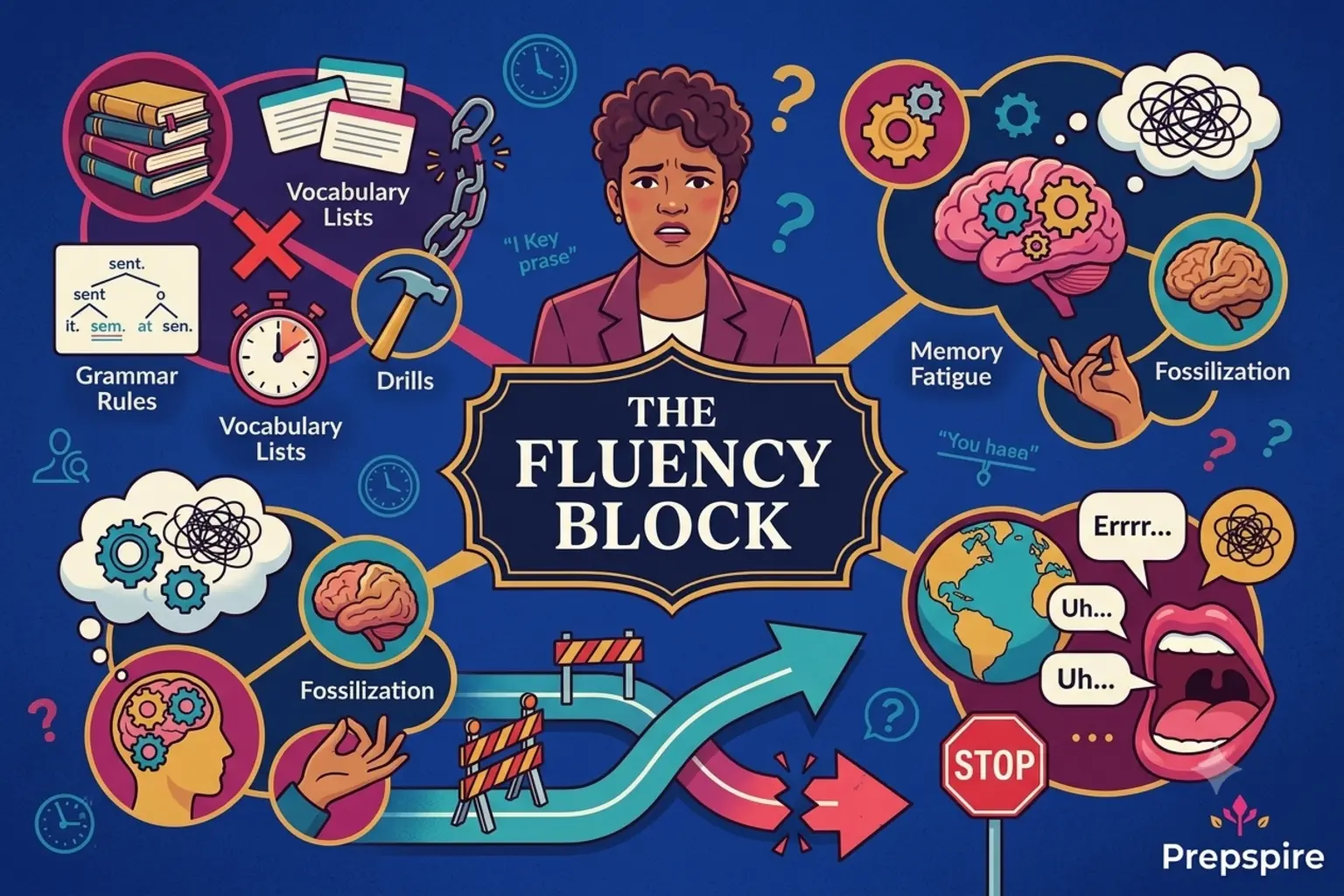
For many Adult ESL Learners, learning English has been a journey that spans years, sometimes even decades. They have attended classes, memorized grammar rules, completed countless exercises, and built an impressive vocabulary. Yet when it comes to speaking in real-life situations, many still hesitate, pause frequently, or struggle to express themselves naturally.
This experience is surprisingly common. Knowing English and using it confidently are two very different skills. Many learners wonder why they still cannot communicate fluently despite years of study. Some even ask, “How long does it take to become fluent in English?” The answer often depends less on the number of years spent studying and more on how the language has been learned and practiced.
Let’s explore why so many adult learners face this challenge and what they can do to finally achieve lasting english fluency for adults.
Read More: Adult Learning and English Fluency: Why Grown-Up Learners Need a Different Method
Learning About English Isn’t the Same as Using English
Traditional language education often focuses on reading, writing, grammar, and examinations. While these skills are valuable, they don’t automatically prepare learners for spontaneous conversations.
Many Adult ESL Learners know exactly which grammar rule applies in a sentence. However, during a conversation, they spend too much time thinking about accuracy instead of communicating naturally.
Real conversations happen quickly. Native speakers rarely pause to analyze grammar before speaking. Instead, they rely on repeated exposure and automatic language patterns.
This is why learners who have excellent test scores sometimes struggle during real life english conversation.
Fear of Making Mistakes Slows Down Fluency
One of the biggest barriers to speaking English confidently is the fear of making errors.
Many learners constantly worry about pronunciation, grammar, vocabulary, or sounding “incorrect.” This fear causes hesitation, making conversations feel stressful rather than enjoyable.
Ironically, trying to speak perfectly often creates more mistakes.
The reality is that fluent speakers—even native speakers—occasionally make errors. Communication is about sharing ideas clearly, not producing perfect sentences every time.
Reducing the fear of common english speaking mistakes allows learners to speak more freely and gradually build stronger english speaking confidence.
Limited Speaking Practice
Many adults spend years studying English but surprisingly little time actually speaking it.
Reading textbooks, watching grammar lessons, and completing worksheets improve knowledge, but they cannot replace active conversation.
Developing strong english conversation skills requires consistent interaction with other speakers.
Effective spoken english practice includes:
- Daily conversations
- Role-playing everyday situations
- Speaking aloud while reading
- Language exchange sessions
- Recording and reviewing your own speech
The more opportunities learners have to speak, the more natural English becomes.
Listening Skills Are Often Overlooked
Speaking and listening develop together.
Many learners focus entirely on speaking without spending enough time improving english listening and speaking simultaneously.
Listening provides examples of:
- Natural sentence structure
- Rhythm
- Pronunciation
- Everyday vocabulary
- Common expressions
The more English learners hear, the easier it becomes to reproduce those patterns naturally.
This is why immersion plays such an important role in Improve English Fluency.
Thinking in Your Native Language First
Many learners mentally translate every sentence before speaking.
For example:
Native language → English translation → Speaking
This process slows conversations considerably.
Fluent speakers gradually learn thinking in english, allowing ideas to flow directly without translation.
Building this habit takes time but significantly improves speaking speed and confidence.
Simple exercises include:
- Naming objects around you in English
- Narrating daily activities
- Planning your day internally in English
- Describing what you see while walking
These activities train the brain to process English directly.
Pronunciation Challenges Affect Confidence
Poor pronunciation doesn’t always prevent communication, but it often reduces confidence.
Many learners avoid speaking because they worry people won’t understand them.
Regular english pronunciation practice helps learners become more comfortable using spoken English.
Rather than trying to imitate every native accent, learners should focus on:
- Clear vowel sounds
- Word stress
- Sentence rhythm
- Intonation
- Connected speech
Improved pronunciation often leads directly to stronger english speaking fluency.
Vocabulary Isn’t the Main Problem
Many learners believe they need thousands of additional words before they can speak fluently.
In reality, most daily conversations use a relatively small group of high-frequency words.
The challenge isn’t vocabulary size.
It’s vocabulary accessibility.
Learners often recognize words while reading but cannot recall them quickly during conversation.
Regular conversational english training helps move vocabulary from passive memory into active use.
The goal is not simply knowing more words but using familiar words more naturally.
Adults Have Less Exposure Than Children
Children acquire language through constant exposure.
They hear it all day.
They use it repeatedly.
They make mistakes without fear.
Adults often spend only a few hours each week studying English.
Without consistent exposure, language patterns never become automatic.
Creating daily English habits can dramatically accelerate english fluency training.
Examples include:
- Listening to podcasts
- Watching English videos
- Reading news articles
- Speaking with language partners
- Writing short journal entries
Small daily habits usually outperform long weekly study sessions.
Confidence and Fluency Grow Together
Many learners wait until they become fluent before speaking confidently.
In reality, confidence develops through speaking.
Every successful conversation increases speaking confidence, making the next conversation easier.
Confidence is built through experience, not perfection.
This is especially important in professional environments where professional english speaking skills influence career opportunities.
The more learners communicate, the stronger both confidence and fluency become.
Exam Preparation Doesn’t Always Build Conversation Skills
Many learners prepare extensively for exams such as IELTS Speaking Confidence, IELTS Speaking Fluency, PTE Speaking Fluency, or TOEFL Speaking Practice.
While these exams improve structured speaking ability, they don’t always prepare learners for spontaneous discussions.
Everyday conversations involve:
- Interruptions
- Informal vocabulary
- Changing topics
- Humor
- Fast responses
Building ESL Speaking Skills requires practicing beyond examination formats.
Combining exam preparation with authentic conversation creates more balanced communication abilities.
Fluency Is Built Through Consistency, Not Intensity
Many adults believe they need several hours of study every day.
In reality, consistency matters far more.
Twenty to thirty minutes of meaningful English exposure daily often produces better long-term results than occasional marathon study sessions.
An effective routine may include:
- 10 minutes of listening
- 10 minutes of reading
- 10 minutes of speaking
Repeating this daily gradually strengthens everyday english communication.
Speaking Naturally Requires Real Communication
One reason learners plateau is that they rarely experience authentic conversations.
Real communication forces learners to:
- Think quickly
- Respond naturally
- Adapt vocabulary
- Clarify misunderstandings
- Express opinions
These experiences help learners speak english naturally rather than recite memorized dialogues.
Joining conversation groups, finding speaking partners, or enrolling in a fluent english speaking course can provide the regular interaction necessary for meaningful progress.
The Journey to Fluency Looks Different for Every Adult
Many adults ask, how long does it take to become fluent in english?
There is no universal timeline.
Factors include:
- Previous language experience
- Study consistency
- Daily exposure
- Speaking opportunities
- Motivation
- Learning methods
Most importantly, fluency isn’t a destination that suddenly appears.
It’s a gradual process where speaking becomes increasingly easier, faster, and more natural over time.
Rather than measuring progress by perfection, learners should celebrate improvements in confidence, communication, and understanding.

Conclusion
The biggest challenge facing Adult ESL Learners isn’t a lack of intelligence or dedication. Most have invested years studying English. The real obstacle is that traditional learning often emphasizes knowing the language rather than using it.
Achieving lasting english fluency for adults requires regular speaking practice, active listening, realistic conversations, pronunciation improvement, and the confidence to communicate despite occasional mistakes.
Fluency grows through daily use, not flawless grammar. By focusing on meaningful interaction instead of perfection, learners gradually transform classroom knowledge into practical communication skills.
With patience, consistency, and authentic practice, every adult learner can move beyond simply knowing English and begin speaking it naturally and confidently.
Frequently Asked Questions (FAQs)
1. Why do Adult ESL Learners struggle with fluency after studying English for years?
Many learners spend most of their time learning grammar and vocabulary instead of practicing real conversations. Fluency develops through regular speaking, listening, and interaction, not just classroom study.
2. How can I improve my English speaking confidence?
Start speaking every day, even for a few minutes. Practice with language partners, record yourself, work on english pronunciation practice, and accept that making mistakes is a natural part of learning.
3. How long does it take to become fluent in English?
The answer varies for every learner. Consistent daily practice, meaningful conversations, and active listening usually lead to noticeable improvement much faster than occasional intensive study.
4. Is conversational English training better than grammar study?
Both are important, but conversational english training helps learners apply grammar naturally during real conversations. A balanced approach produces the best results.
5. What is the best way to speak English naturally?
The best approach is combining daily listening, regular speaking practice, reading authentic English content, thinking in English, and participating in real life english conversation whenever possible. Over time, these habits help you develop natural, confident communication.




Leave a Reply