Introduction
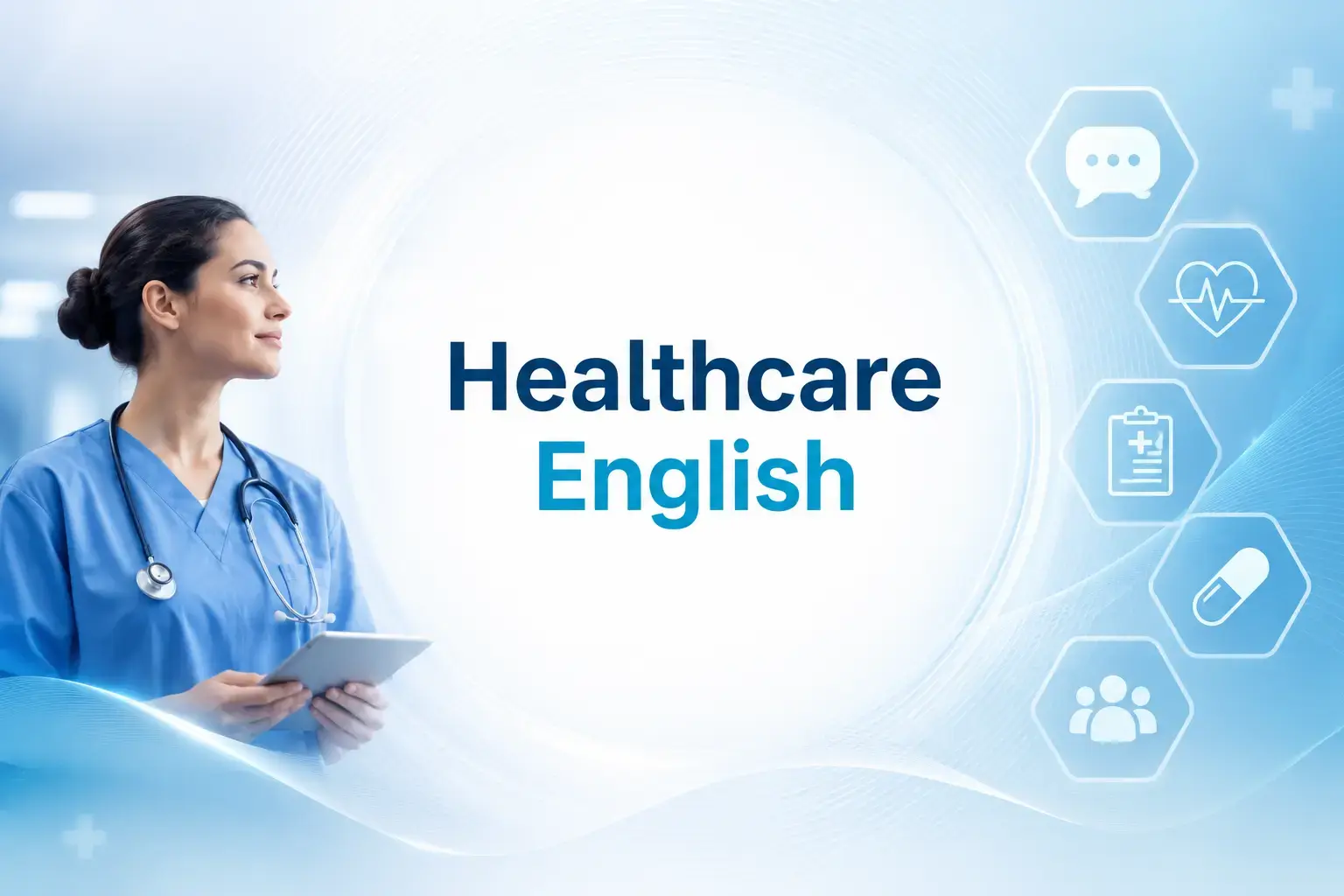
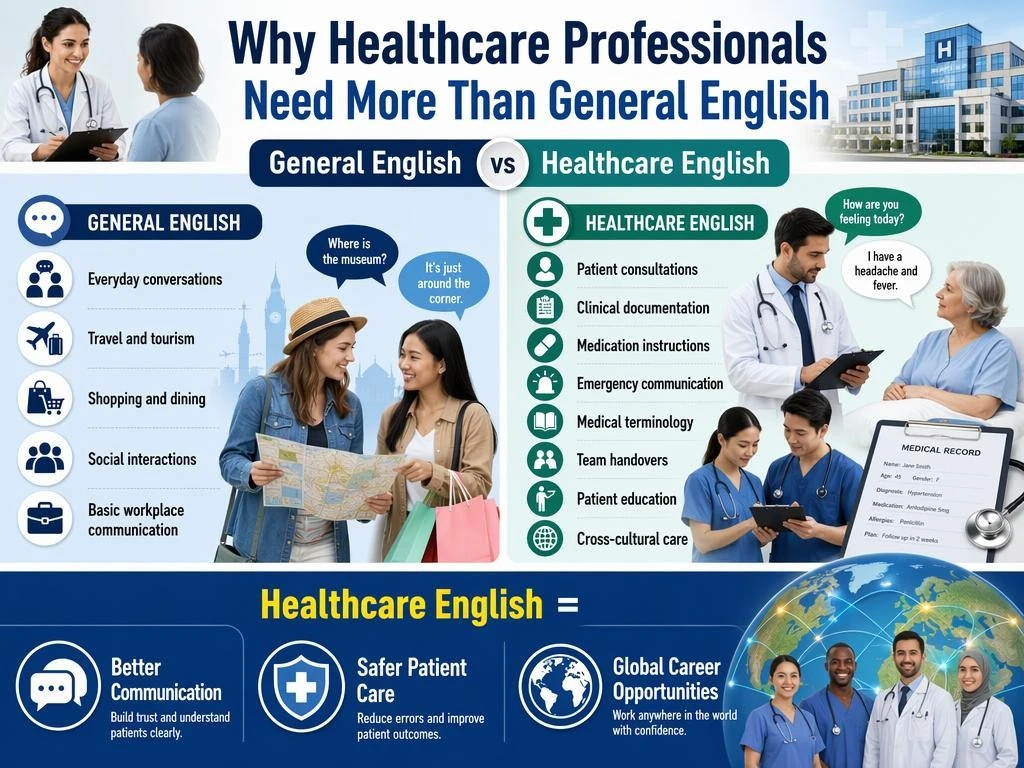
Healthcare professionals increasingly work in international environments where English is the common language. General conversational English provides a foundation, but safe clinical practice requires specialised Medical English and effective healthcare communication skills.
General English vs Healthcare English
Healthcare English focuses on precise patient instructions, clinical explanations and professional documentation. Clear communication directly affects patient safety.
Read More: Medical English for Global Careers: From Patient Conversations to Clinical Writing
Communication Is a Clinical Skill
Strong communication improves patient trust, treatment adherence, teamwork, diagnostic accuracy and professional reputation while reducing avoidable errors.
Patient Communication
Doctors, nurses and allied professionals must explain diagnoses, treatments and procedures using language patients understand, combining technical accuracy with empathy.
Listening Skills
Active listening helps identify symptoms, gather accurate histories, recognise patient concerns and strengthen doctor–patient relationships.
Clinical Documentation
Patient notes, referral letters, discharge summaries and electronic health records must be concise, objective, accurate and legally appropriate.
Clinical Handovers
Structured handover methods such as SBAR improve continuity of care and reduce communication errors during shift changes and patient transfers.
Multicultural Teams
Modern hospitals bring together professionals from many countries. Clear, respectful and culturally sensitive communication improves teamwork and patient outcomes.
Medical Vocabulary
Healthcare professionals need anatomy, physiology, pharmacology and procedural terminology together with patient-friendly explanations, collocations and professional phrases.
OET and Professional English
The Occupational English Test assesses real clinical communication including consultations, referral letters, listening and healthcare reading. Preparing for OET develops practical workplace English.
International Careers
Strong Medical English improves employability, interview performance and workplace confidence for clinicians seeking overseas healthcare jobs.
Professional Development
Language learning should continue throughout a healthcare career to support research, leadership, conferences and lifelong clinical learning.
Practical Tips
Read clinical guidelines, listen to medical podcasts, practise consultations, improve clinical writing, learn vocabulary in context and seek regular professional feedback.
FAQ
Q: Is general English enough?
A: It provides a foundation, but specialised Medical English is essential.
Q: Why is communication important?
A: It improves patient safety and teamwork.
Q: Is OET useful?
A: Yes, it develops workplace communication as well as exam readiness.

Final Thoughts
Medical English combines technical accuracy, empathy and professionalism. Investing in healthcare communication improves patient care and international career opportunities.
Learn with Prepspire
Prepspire offers Medical English, OET Preparation, Clinical Communication Skills, Healthcare Vocabulary, Clinical Writing and IELTS Academic programmes for healthcare professionals.



Leave a Reply