Introduction
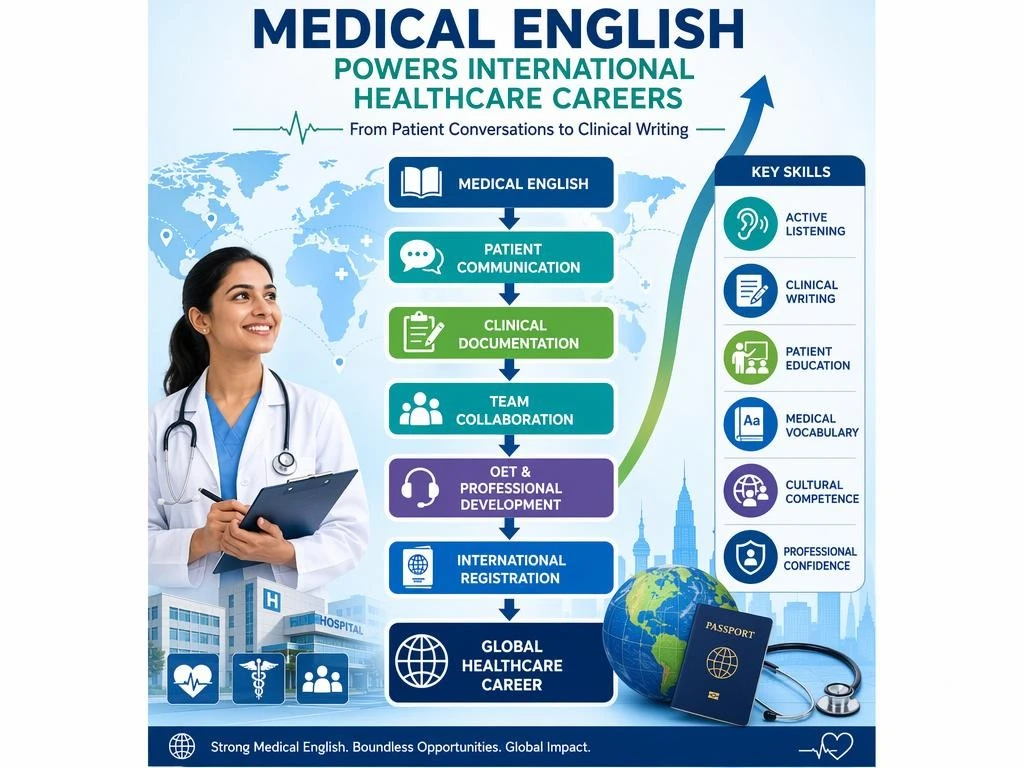
Healthcare is increasingly international, and effective Medical English has become an essential professional skill. Beyond conversational English, clinicians need specialised communication for patient care, documentation and teamwork.
Why Medical English Matters
Healthcare professionals use English to interview patients, explain diagnoses, discuss treatment, obtain informed consent, document care and collaborate with multidisciplinary teams. Strong communication improves patient safety and employability.
Read More: Why Healthcare Professionals Need More Than General English
Patient Conversations
Clinical communication combines empathy with accuracy. Professionals should explain complex medical conditions in clear, patient-friendly language while maintaining clinical precision.
Active Listening
Active listening helps clinicians gather accurate histories, recognise patient concerns and build trust through open questions, clarification and summarising key information.
Cultural Competence
International healthcare requires sensitivity to cultural differences in communication, family involvement, beliefs and decision-making. Respectful language improves patient-centred care.
Clinical Writing
Patient notes, referral letters, discharge summaries, progress notes and electronic health records must be concise, objective, accurate and legally appropriate.
Clinical Case Reports
Well-structured case reports communicate patient history, examination findings, diagnosis, treatment and outcomes while contributing to medical education.
Electronic Health Records
Digital documentation demands precise, measurable language that supports continuity of care and avoids ambiguity.
Multidisciplinary Team Communication
Effective communication during ward rounds, referrals, clinical handovers and emergency situations improves teamwork and patient safety. Frameworks such as SBAR help standardise communication.
Medical Vocabulary
Professionals need more than terminology—they also require patient-friendly explanations, collocations, pronunciation, documentation skills and professional etiquette.
OET and Clinical Practice
OET reflects real workplace communication through consultations, referral letters, listening and healthcare reading. Preparing for OET strengthens practical clinical English.
International Healthcare Careers
Strong Medical English improves interview performance, overseas registration, workplace confidence and long-term career mobility.
Professional Development
Continuous language development supports research, conferences, leadership, teaching and lifelong learning.
Practical Tips
Read clinical guidelines, listen to medical podcasts, practise consultations, improve referral letters, learn vocabulary in context and seek expert feedback.
FAQ
Q: Is Medical English different from General English?
Yes.
Q: Why is clinical writing important?
It supports continuity of care and patient safety.
Q: Is OET useful?
Yes, it develops real healthcare communication.

Final Thoughts
Medical English combines technical accuracy, empathy and professionalism. Investing in these skills benefits patients, colleagues and international career opportunities.
Learn with Prepspire
Prepspire offers Medical English, OET Preparation, Clinical Communication, Clinical Writing, Healthcare Vocabulary and IELTS Academic programmes for healthcare professionals.


Leave a Reply