

Introduction
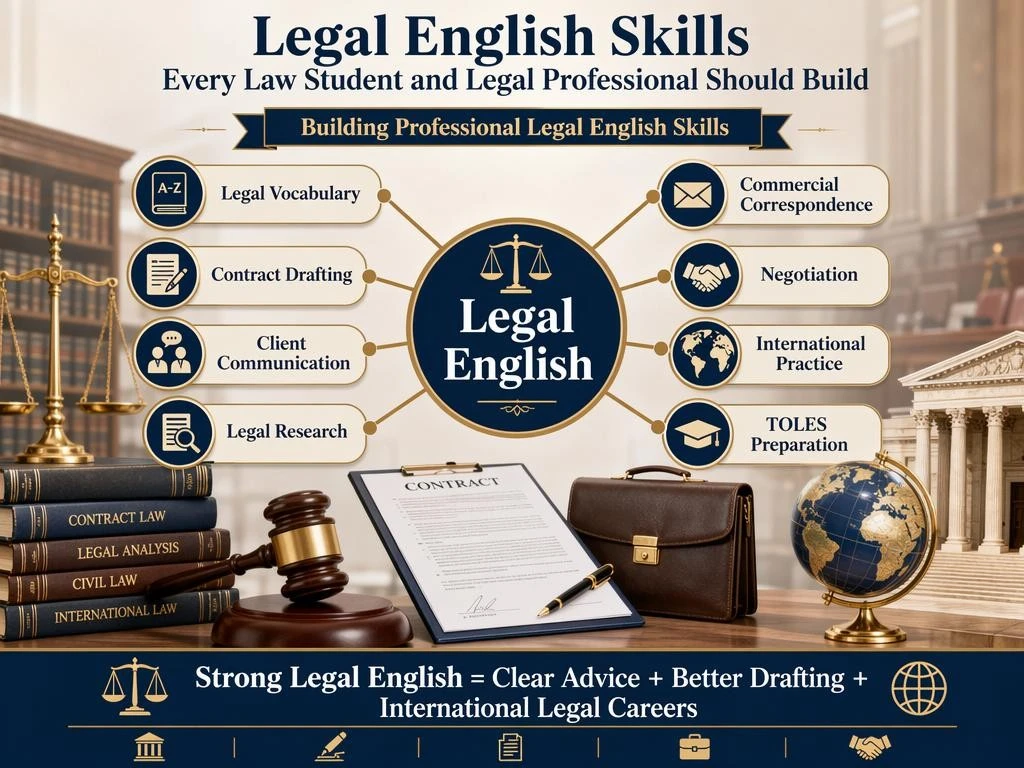
Legal practice is increasingly international. Strong Legal English enables lawyers and law students to draft documents, advise clients, negotiate effectively and work confidently across jurisdictions.
General English vs Legal English
General English supports everyday communication, while Legal English requires precision because wording can affect contractual rights, litigation and regulatory compliance.
Read More: Medical English for Global Careers: From Patient Conversations to Clinical Writing
Communication as a Professional Skill
Lawyers rely on accurate communication when interviewing clients, drafting contracts, preparing legal opinions, negotiating settlements and conducting legal research.
Client Communication
Complex legal concepts should be explained in clear language that clients understand, building trust while reducing misunderstanding.
Contract Drafting
Good contracts are precise, consistent, commercially practical and legally enforceable. Clear drafting reduces ambiguity and future disputes.
Legal Writing
Professional legal writing includes memoranda, opinions, pleadings, contracts, witness statements and compliance reports. Clarity and logical structure are essential.
Legal Vocabulary
Develop legal terminology together with collocations such as breach of contract, due diligence, force majeure, burden of proof and intellectual property.
Legal Research
Lawyers should confidently analyse legislation, regulations, case law, treaties and academic commentary using English-language legal resources.
Professional Correspondence
Client emails, advice letters, negotiation correspondence and regulatory responses should remain concise, respectful and accurate.
Negotiation English
Effective negotiation requires precise language, active listening, persuasive communication and careful documentation of agreed terms.
Commercial Legal English
Corporate practice demands confidence with contracts, mergers, compliance, governance, employment law and commercial transactions.
International Practice
Cross-border work requires cultural awareness, plain English drafting and familiarity with international legal terminology.
TOLES
TOLES helps lawyers develop practical Legal English through contract language, drafting, reading and professional communication.
Practical Tips
Read contracts, analyse judgments, expand legal vocabulary in context, practise drafting, improve client communication and seek professional feedback.
FAQ
Q: Is Legal English different from General English?
Yes.
Q: Why is contract drafting important?
It reduces ambiguity and legal risk.
Q: Is TOLES valuable?
Yes, particularly for international legal practice.

Final Thoughts
Legal English combines precision, clarity and professionalism. Strong communication protects clients and creates international career opportunities.
Learn with Prepspire
Prepspire offers Legal English, TOLES preparation, Contract Drafting, Legal Writing, Commercial Legal English and Professional Communication courses.




Leave a Reply