
Introduction
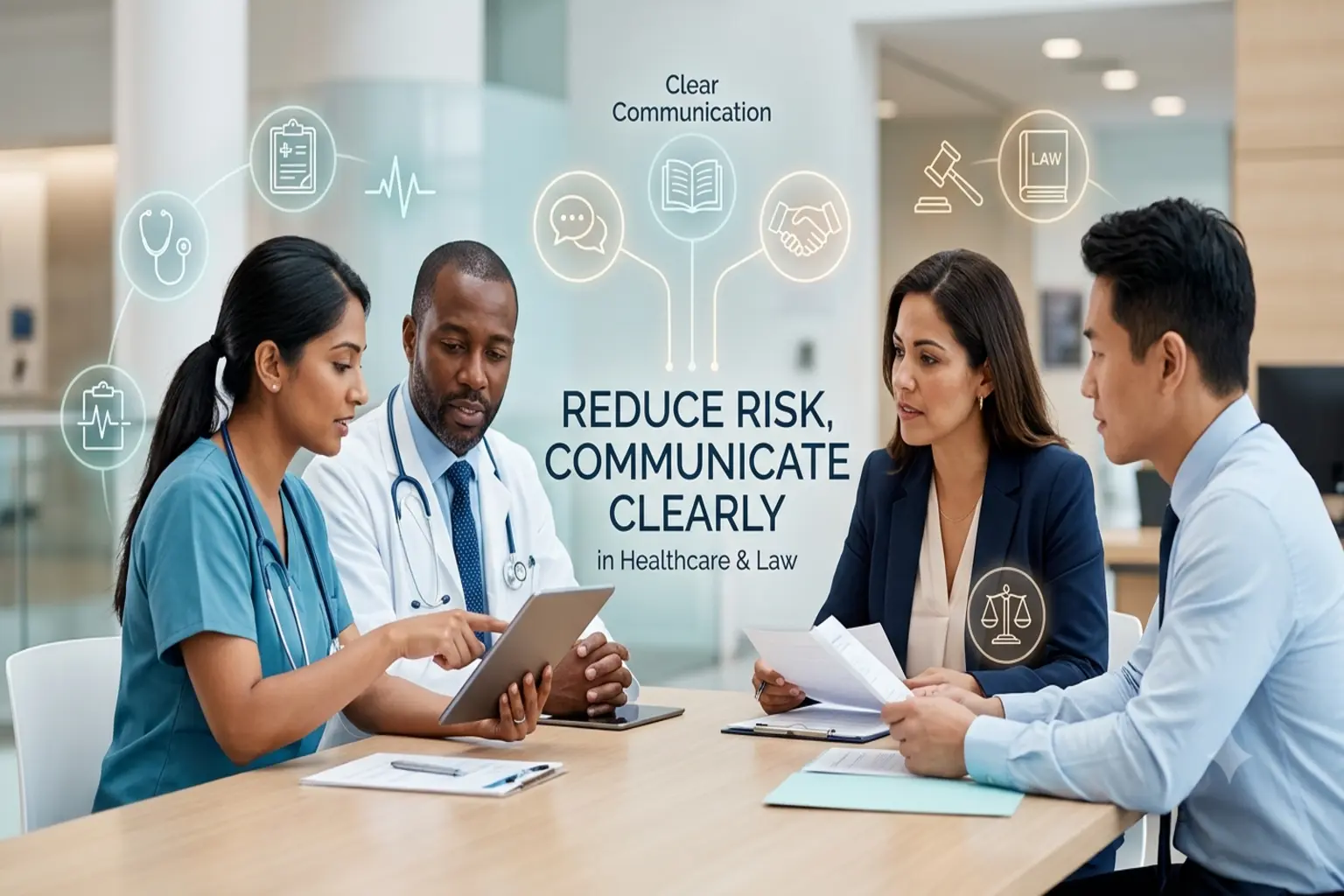
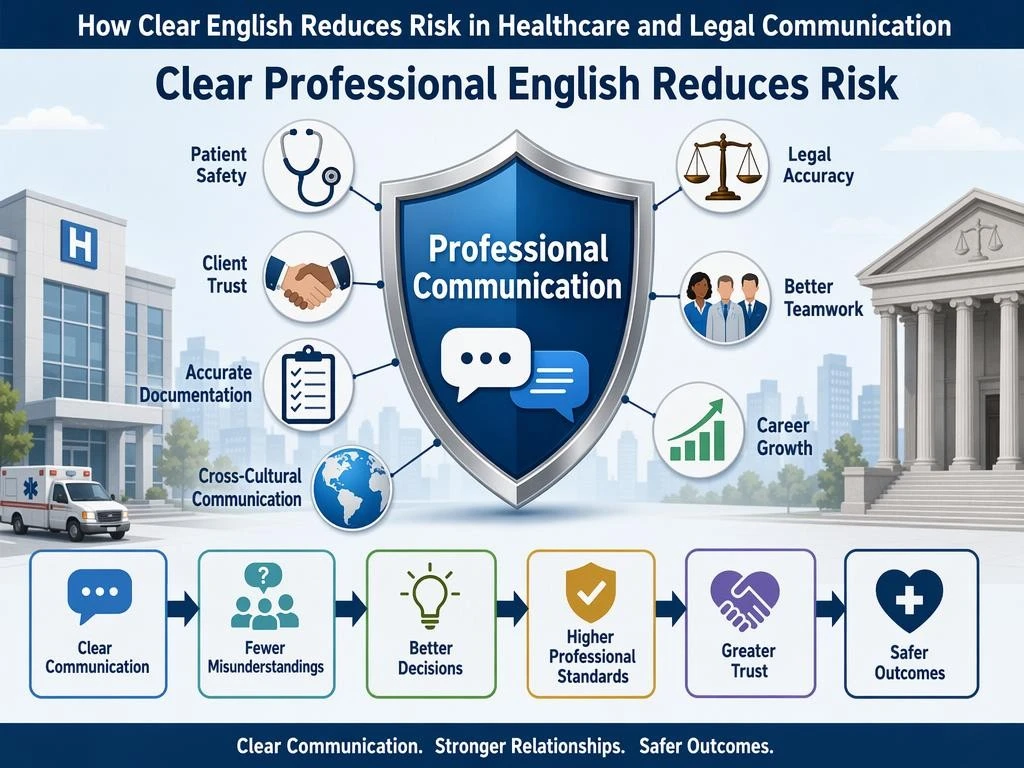
Clear professional English is essential in healthcare and legal practice because misunderstandings can affect patient safety, client outcomes and organisational risk.
Communication Errors
Most serious workplace communication failures arise from incomplete, ambiguous or delayed information rather than lack of technical knowledge.
Read More: Legal English Skills Every Law Student and Legal Professional Should Build
Patient Safety
Clear explanations of diagnoses, treatments, medicines and follow-up care improve patient understanding, adherence and safety.
Client Confidence
Lawyers should translate legal terminology into plain language so clients can make informed decisions with confidence.
Professional Documentation
Healthcare records, referral letters, contracts, legal opinions and compliance documents should be accurate, concise, objective and easy for colleagues to understand.
Cross-Cultural Communication
Professionals should avoid unnecessary jargon, confirm understanding and adapt communication respectfully when working across cultures.
Plain English
Plain English improves understanding without sacrificing accuracy. It reduces confusion and strengthens informed decision-making.
Communication as Risk Management
Clear communication improves teamwork, documentation quality, accountability and organisational safety while reducing avoidable errors.
Workplace Communication Strategies
Use structured handovers, check-back techniques, active listening, concise writing and standard communication frameworks to minimise misunderstandings.
Communication Training
Regular communication training, simulation exercises and feedback sessions help professionals maintain high standards of workplace communication.
Technology
Electronic health records, secure messaging, document templates and AI writing tools support communication but should never replace professional judgement.
Continuous Professional Development
Professionals should continually improve communication through reading, workshops, mentoring and practical workplace experience.
Practical Tips
Use plain English, confirm understanding, write clearly, proofread carefully, document objectively, seek feedback and practise communication regularly.
FAQ
Q: Why is clear English important?
A: It reduces risk and improves outcomes.
Q: Does plain English reduce professionalism?
A: No, it improves understanding.
Q: Can communication training improve safety?
A: Yes, significantly.

Final Thoughts
Clear communication protects patients, clients, colleagues and organisations. It is one of the most valuable professional skills in healthcare and legal practice.
Learn with Prepspire
Prepspire offers Professional English, Medical English, Legal English, OET, TOLES, Clinical Communication and Professional Writing programmes.




Leave a Reply