

Introduction
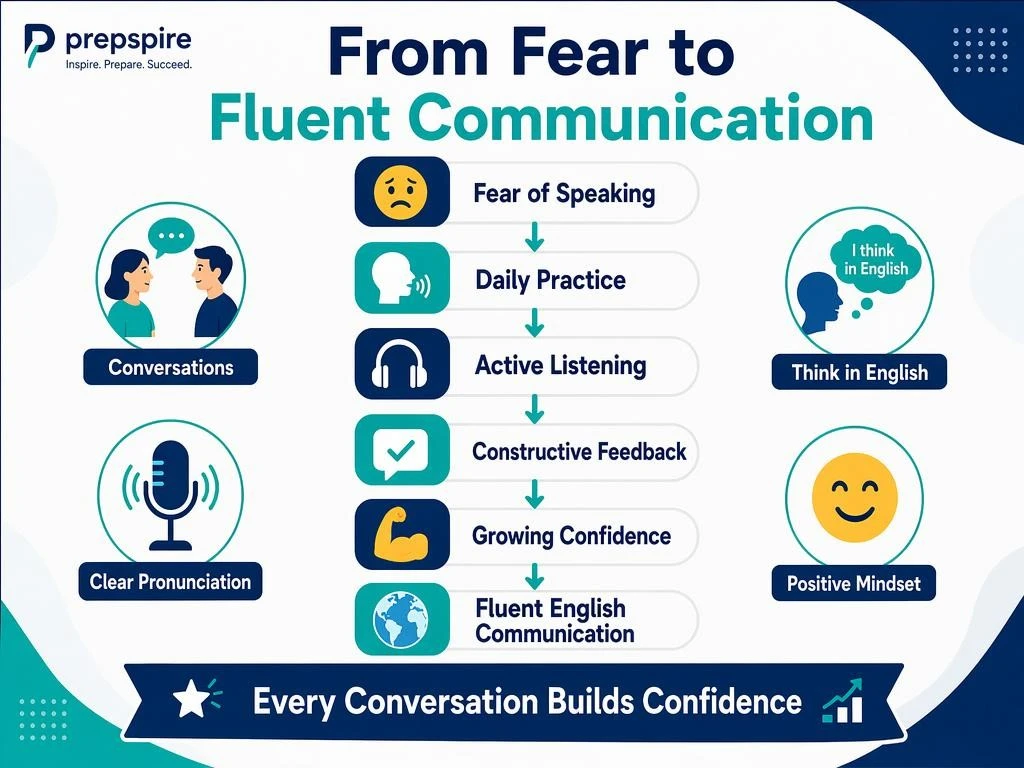
Many adults understand English well but hesitate to speak because of fear. The fear of speaking English is common and can be overcome through consistent practice, realistic expectations and positive speaking experiences.
Why Adults Feel Nervous
Common concerns include grammar mistakes, forgetting vocabulary, having an accent, speaking slowly and being judged. Recognising these fears is the first step towards overcoming them.
Read More: Why Busy Professionals Need a Time-Efficient English Learning Method
Perfection Is Not the Goal
Successful communication is about being understood, not speaking perfectly. Confidence grows through communication rather than waiting until every sentence is flawless.
Start with Small Conversations
Begin with familiar topics such as family, work, hobbies and daily routines. Short conversations build conversational English practice and reduce anxiety.
Think in English
Avoid translating every sentence. Start with simple internal thoughts in English to make conversations more natural and reduce hesitation.
Accept Your Accent
Focus on clear pronunciation, rhythm and word stress rather than trying to eliminate your accent. Clear speech matters more than sounding native.
Daily Speaking
Read aloud, record voice notes, summarise articles and answer interview questions. Ten to fifteen minutes of daily English speaking exercises steadily build confidence.
Listening Reduces Anxiety
Podcasts, audiobooks, interviews and films help learners recognise pronunciation and natural expressions, reducing speaking anxiety in English.
Mistakes Are Progress
Treat mistakes as learning opportunities. Every conversation provides valuable feedback and builds English speaking confidence.
Real Conversation Practice
Join conversation groups, speak with colleagues, practise with tutors or AI tools and use English in everyday situations. Real interaction is the fastest route to confident communication.
Public Speaking
Begin with short presentations, explain familiar topics and gradually increase the size of your audience. Preparation and repetition reduce anxiety.
Build Long-Term Confidence
Track improvements instead of perfection. Celebrate speaking longer, understanding more and responding more naturally than before.
Practical Tips
Speak every day, think in English, accept corrections, practise pronunciation, listen actively, build vocabulary in context and remain consistent.
FAQ
Q: How can I overcome fear?
A: Speak regularly in low-pressure situations.
Q: Should I wait until my grammar is perfect?
A: No. Communication comes first.
Q: Does my accent matter?
A: Clear pronunciation is more important than having a native accent.

Final Thoughts
Fear disappears through repeated positive experiences. With regular practice, adults become confident English speakers regardless of age or previous learning experience.
Learn with Prepspire
Prepspire offers Spoken English, English Conversation Practice, Pronunciation Coaching, IELTS, TOEFL, PTE, TOEIC and Workplace Communication courses designed to build confidence.




Leave a Reply