

Introduction
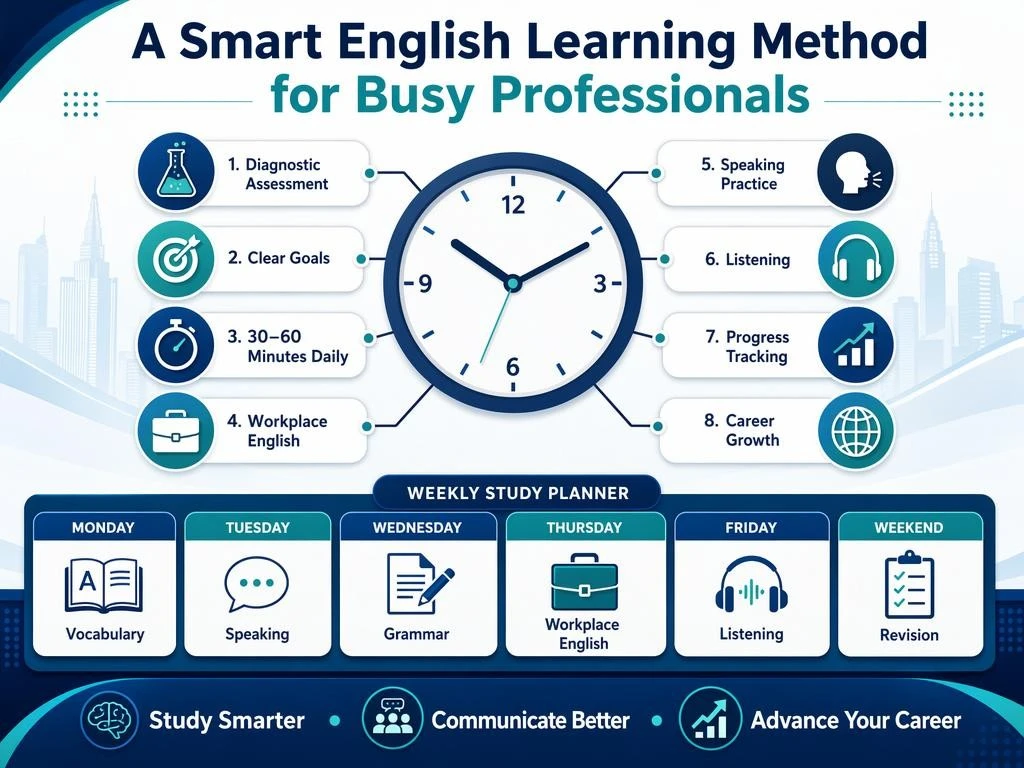
For busy professionals, English is essential for career growth, international collaboration and professional development. A time-efficient English learning method focuses on practical communication and consistent progress rather than long hours of study.
Why Traditional Methods Fail
Many courses emphasise grammar and memorisation but provide little speaking practice or workplace relevance. Professionals benefit from targeted learning linked directly to their jobs.
Read More: The Fastest Way for Adults to Improve English Fluency
Define Clear Goals
Identify whether you need English for meetings, presentations, international clients, interviews or exams such as IELTS, TOEFL, PTE, OET or TOEIC. Clear goals guide efficient study.
Focus on High-Value English
Prioritise workplace vocabulary, email writing, meetings, negotiations, presentations and networking instead of studying every aspect of English equally.
Flexible Study Routine
Use short study blocks: vocabulary in the morning, listening during lunch, speaking in the evening. Small daily sessions outperform occasional marathon study.
Personalised Learning
A diagnostic English assessment helps identify strengths and weaknesses so learners can focus on pronunciation, vocabulary, writing or presentation skills.
Workplace Communication
Practise realistic business situations such as meetings, client calls, project updates, presentations and constructive feedback.
Technology
Online courses, AI conversation partners, pronunciation tools and mobile apps support flexible English learning but should complement real communication.
Measure Progress
Track practical outcomes: clearer emails, better presentations, increased confidence in meetings and improved listening rather than chasing perfection.
Presentation Skills
Practise opening presentations, explaining charts, answering questions and closing confidently. Record yourself and seek feedback.
Business Communication
Develop concise email writing, negotiation language, report writing and cross-cultural communication to improve professional credibility.
Exam Preparation
If preparing for IELTS, TOEFL, PTE, OET or TOEIC, integrate exam tasks into your weekly routine without neglecting real-world communication.
Practical Tips
Study daily, focus on relevant language, review regularly, speak often, listen actively, use technology wisely and measure progress.
FAQ
Q: How much should busy professionals study?
A: 30–45 focused minutes daily.
Q: Is speaking more important than grammar?
A: Communication comes first, grammar improves accuracy.
Q: Can professionals improve without classes?
A: Yes, through structured self-study and regular conversation.

Final Thoughts
Learning smarter is more effective than learning longer. A structured, personalised English learning method helps professionals achieve measurable progress despite busy schedules.
Learn with Prepspire
Prepspire offers Business English, Workplace Communication, Presentation Skills, IELTS, TOEFL, PTE, OET, TOEIC and Professional English programmes designed for busy professionals.




Leave a Reply