
Help your audience follow every step
A strong presentation is easy to follow. In English, signposting language, the short phrases that tell listeners where you are and where you’re going, does much of that work.
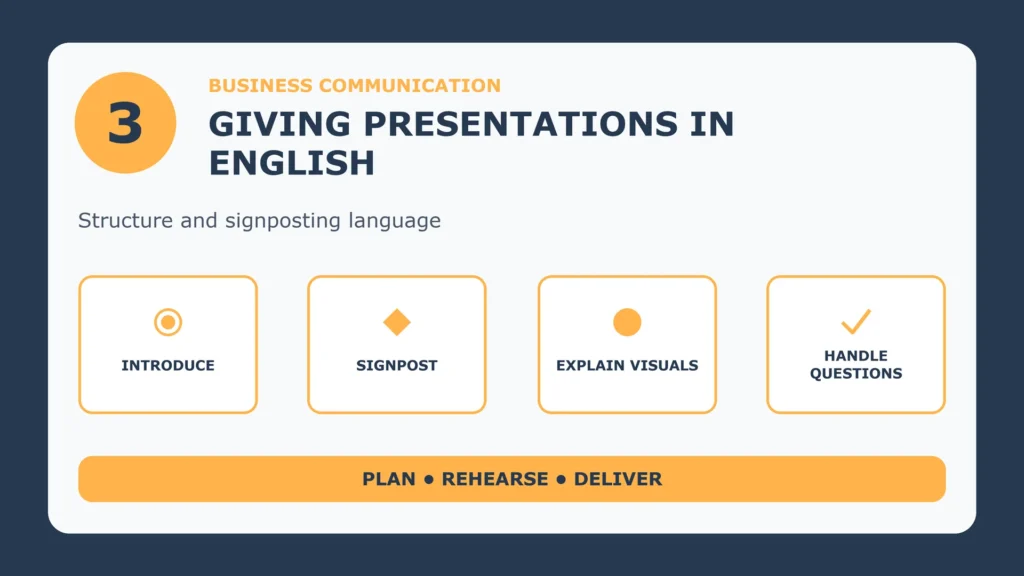
A simple structure
- Introduction: greet, introduce yourself and the topic, and preview the main points.
- Main points: two to four sections, each with one key message.
- Conclusion: summarise the key messages and state what you want the audience to do or remember.
- Questions: invite and handle questions.
Signposting language
Opening
- Good morning, everyone. Thank you for coming.
- Today I’d like to talk about…
- I’ve divided my presentation into three parts.
Moving between points
- Let’s start with…
- Moving on to the next point, …
- That brings me to…
Emphasising
- The key point here is…
- What’s really important is…
Concluding
- To sum up, …
- The main takeaway is…
- In short, we recommend…
Describing visuals
- As you can see on this slide, …
- This chart shows…
- Sales rose sharply in March and then levelled off.
- Let me draw your attention to…
Keep slides simple and let your words explain them; don’t read slides aloud word for word.
Handling questions
- Thank you, that’s a good question.
- If I’ve understood correctly, you’re asking about…
- I don’t have that figure with me, but I’ll send it to you after the presentation.
- Does that answer your question?
It’s fine to rephrase a question to check understanding, or to promise a follow-up.
Delivery tips
- Slow down. Nervous speakers often speak too fast; pauses help listeners.
- Stress key words and pause after important points.
- Make eye contact with different parts of the audience.
- Use short sentences that you can say comfortably.
Rehearsing
- Say your presentation aloud at least twice, timing yourself.
- Record one rehearsal and note where you hesitate or rush.
- Practise the transitions until they are automatic.
- Prepare answers to the three questions you are most likely to be asked.
Common mistakes
- No preview, so the audience can’t see the structure.
- Too much text on slides.
- Ending abruptly without a summary.