
Contribute clearly, politely and on time
Meetings reward people who can say what they think briefly, respond to others politely, and check that everyone leaves with the same understanding. The right phrases make that much easier in a second language.
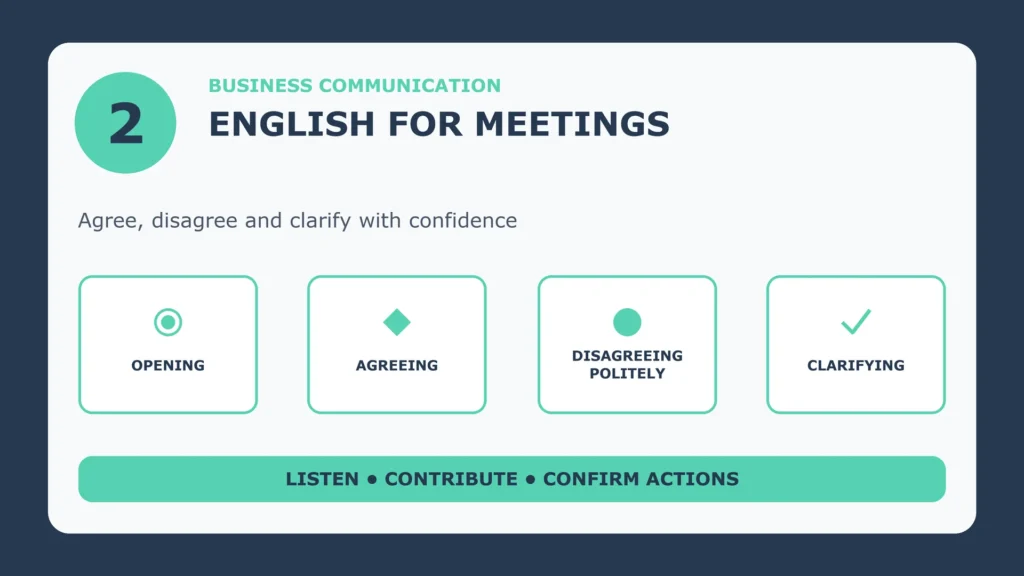
Opening and setting the agenda
- Shall we get started?
- The purpose of today’s meeting is to…
- We have three items to cover.
- Let’s start with…
Giving your opinion
- In my view, …
- I think we should…, because…
- From a budget perspective, …
Keep it short: a point, a reason, and an example if needed.
Agreeing
- I agree with Maria on that.
- That makes sense to me.
- Good point. I’d add that…
Disagreeing politely
Disagreement is normal in meetings. Softening makes it easier to hear.
- I see your point, but I’m not sure that…
- That’s one option. Another way to look at it is…
- I’m a little concerned about…
- Could we consider…?
Avoid flat statements like That’s wrong in most professional contexts.
Clarifying and checking understanding
- Sorry, could you repeat the last part?
- When you say “soon”, do you mean this week?
- So, if I’ve understood correctly, you’re suggesting…
- Could you give an example?
Asking for clarification is professional, not a weakness. It prevents costly misunderstandings.
Interrupting and keeping on track
- Sorry to interrupt, but…
- Could I just add something here?
- Let’s come back to that after this item.
Closing and confirming actions
- Let’s summarise what we’ve agreed.
- So, Ahmed will send the figures by Thursday, and I’ll update the plan.
- Is there anything else before we finish?
Follow up with a short email listing decisions, owners and deadlines.
Common mistakes
- Waiting too long for a “perfect moment” and never contributing.
- Long explanations when a short point would do.
- Agreeing to actions without confirming the deadline.
- Nodding when you haven’t understood.
Practise
- Prepare two or three points before each meeting.
- Practise softened disagreement phrases aloud until they feel natural.
- After meetings, note one phrase you heard others use well.