
Introduction
For many adult learners, one goal stands above all others: speaking English with confidence. Whether you are preparing for a job interview, leading an international meeting, studying for IELTS or TOEFL, or travelling abroad, fluency opens doors to new opportunities. Fluency develops through regular communication, not grammar study alone. Adults who combine daily speaking practice, active listening, guided correction and practical conversation make the fastest progress.
Read More: How Adult Learners Can Rebuild Core English Skills Without Starting from Zero
What English Fluency Means
Fluency is the ability to communicate naturally, respond confidently, understand everyday English, explain ideas clearly and keep conversations moving. It is not about having a perfect accent or flawless grammar.
Speak Every Day
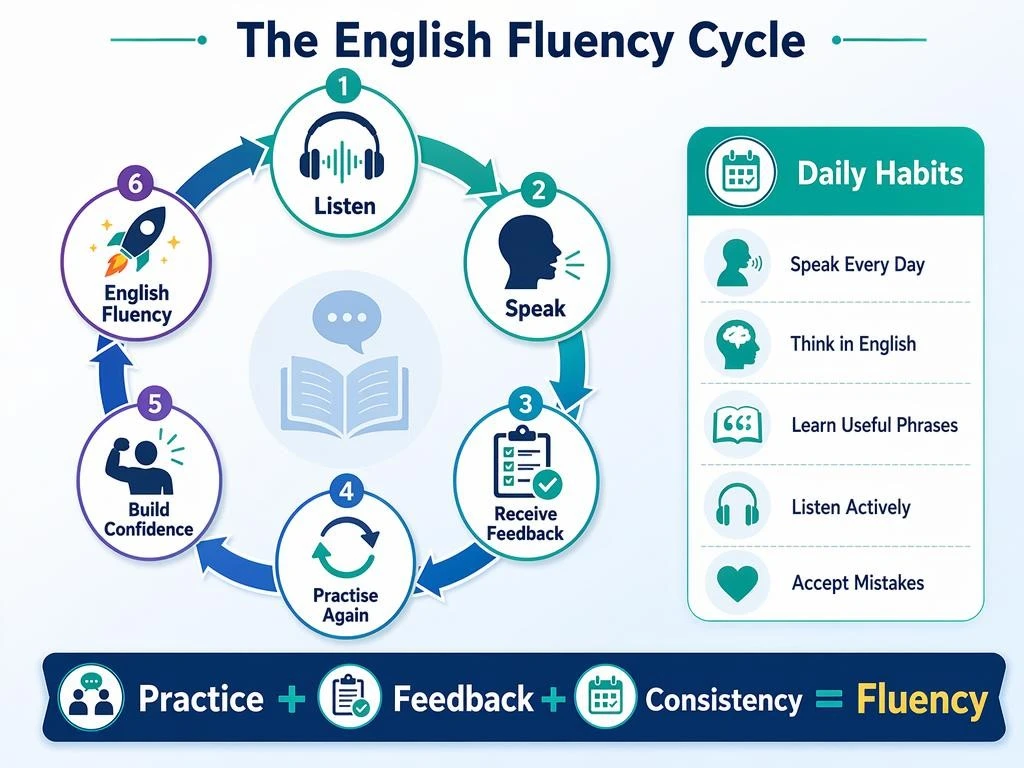
Develop a habit of speaking English for 10–15 minutes every day. Describe your day, answer interview questions, record voice notes, discuss current events and talk about your work. Consistency is far more important than long study sessions.
Listening Builds Fluency
Listen to podcasts, TED Talks, audiobooks, interviews and news. Use the English shadowing technique by repeating sentences immediately after the speaker to improve pronunciation, rhythm and confidence.
Think in English
Avoid translating every sentence from your native language. Begin with simple thoughts such as ‘I have a meeting this afternoon.’ Thinking directly in English reduces hesitation and speeds up conversations.
Learn Phrases
Learn complete expressions rather than isolated vocabulary. For example: attend a meeting, make a decision, meeting agenda and decision-making process. Phrase learning improves both fluency and grammar naturally.
Receive Feedback
Teachers, conversation partners and AI tools help identify pronunciation, grammar and vocabulary errors. Guided correction accelerates learning and prevents mistakes from becoming permanent habits.
Build Confidence
Confidence develops through repetition. Speak to yourself, read aloud, join conversation groups and practise with tutors. Every successful conversation makes the next one easier.
Grammar Supports Speaking
Grammar should support communication rather than prevent it. Speak first, then refine accuracy through regular feedback.
Read to Speak Better
Read blogs, newspapers, magazines and professional articles to absorb vocabulary, collocations and sentence patterns. Reading aloud further improves pronunciation.
Daily Fluency Routine
Spend about an hour daily: 10 minutes listening, 10 minutes vocabulary review, 15 minutes speaking, 10 minutes reading and 10 minutes writing.
Real-Life Communication
Use English while writing emails, attending meetings, travelling, ordering food and participating in online communities. Real situations build everyday English fluency.
Technology
AI conversation partners, pronunciation software, online tutors and mobile apps make daily English speaking practice convenient, but they should complement genuine communication.
Practical Tips
Speak daily, listen actively, think in English, learn phrases, accept feedback, read widely, practise pronunciation and remain consistent.
FAQs
Q: Can adults become fluent?
Yes, with regular practice.
Q: Should I translate before speaking?
No—think directly in English.
Q: How much should I practise?
Fifteen to thirty minutes of speaking daily is highly effective.

Final Thoughts
Fluency grows through repeated communication. By making English part of everyday life, adults steadily become more confident, capable communicators.
Learn with Prepspire
Prepspire offers Spoken English, Business English, English Conversation Practice, Pronunciation, IELTS, TOEFL, PTE and Workplace Communication programmes focused on practical fluency.




Leave a Reply